

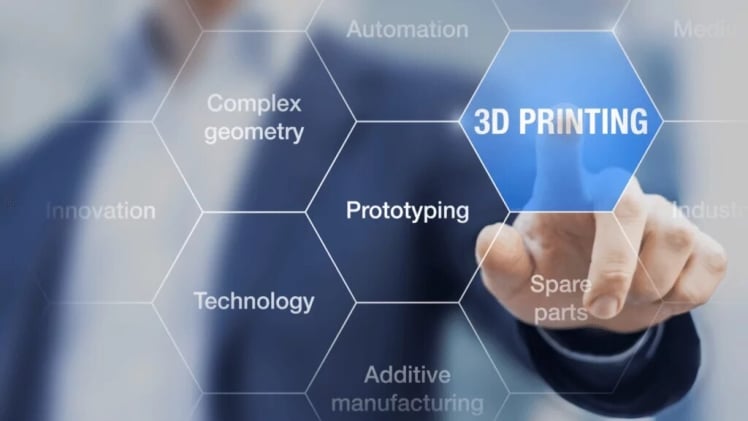
The shipping industry has long been the backbone of global commerce, moving goods across vast distances to meet the demands of consumers and businesses alike. But in recent years, a new technology has emerged that’s starting to shake things up: 3D printing. Once seen as a niche tool for prototyping, 3D printing is rapidly evolving into a mainstream production method with the potential to disrupt traditional shipping models. From reducing inventory needs to cutting transportation costs, the impact of 3D printing on the shipping industry is profound and still unfolding. So, what does this mean for businesses, and how can they leverage this technology to their advantage?
The Rise of Localized Production: Print It Where You Need It
One of the most significant ways 3D printing is disrupting shipping is by enabling localized production. Traditionally, products are manufactured in one part of the world, often in countries with lower labor costs, and then shipped globally to where they’re needed. This model relies heavily on complex logistics networks and long-distance shipping, which can be both time-consuming and costly. However, with 3D printing, businesses can produce items on-demand, right where they’re needed, eliminating the need for shipping.
Imagine a spare part for machinery breaking down at a factory. Instead of waiting days or even weeks for the part to be shipped from a supplier, it can be printed on-site within hours. This not only saves time but also reduces shipping costs and the environmental impact associated with transportation. For companies that manage large inventories, 3D printing allows them to shift from a traditional stock-and-ship model to a print-on-demand approach, which drastically cuts down on storage expenses and waste.
Reducing Shipping Costs and Lead Times
The logistics of shipping are complex and expensive, especially when dealing with international supply chains. Shipping costs can quickly add up due to factors like fuel prices, tariffs, and warehousing fees. 3D printing helps mitigate these costs by enabling the production of goods closer to the end-user. By bypassing long supply chains, businesses can reduce the number of steps involved in getting a product from factory to customer, slashing both lead times and costs.
Furthermore, 3D printing offers the advantage of producing custom parts or small-batch items without the need for expensive molds or setup processes. This flexibility allows companies to adapt quickly to market demands and produce only what is needed, when it’s needed. The result? Faster turnaround times, fewer logistics headaches, and a more responsive supply chain that can better serve customer needs.
Customization at Scale: Meeting Unique Customer Demands
In today’s market, consumers crave personalization, and 3D printing makes customization easier than ever before. From personalized medical devices to custom-fit athletic gear, 3D printing allows businesses to offer products that are uniquely tailored to individual customers without the constraints of traditional manufacturing methods. This capability is not just a nice-to-have—it’s becoming a competitive differentiator.
By using 3D printing, businesses can produce customized products quickly, reducing the reliance on shipping multiple variations of a product from a distant factory. This shift towards mass customization not only enhances the customer experience but also streamlines the supply chain, making it more agile and less dependent on global shipping routes. The ability to meet specific customer needs with on-demand production is a game-changer for businesses looking to stand out in a crowded market.
Tackling the Return Problem
Returns are a costly and complex issue for many businesses, particularly those operating in the e-commerce space. The traditional model of mass production and distribution often leads to overstocked warehouses and a high volume of returns, which can be expensive to process and restock. And then there’s the issue of return fraud, where customers exploit return policies, often costing companies significant amounts of money.
With 3D printing, the return landscape could look very different. By producing items on demand and customizing them to fit specific needs, the likelihood of returns—and the associated costs—can be dramatically reduced. Moreover, 3D printing can be used to create prototypes for customer approval before full-scale production, further minimizing the risk of returns due to dissatisfaction with the final product. This approach not only saves on shipping and handling costs but also helps build a more sustainable business model by cutting down on unnecessary waste.
The Future of Shipping in a 3D-Printed World
As 3D printing technology continues to advance, its impact on the shipping industry will only grow. While it won’t replace all traditional manufacturing and shipping needs, it’s clear that 3D printing is poised to become a crucial part of the supply chain toolkit. For businesses, the key will be identifying where 3D printing can add the most value—whether it’s reducing lead times, lowering shipping costs, or offering customers the customization they crave.
Incorporating 3D printing into your operations doesn’t mean abandoning your existing logistics network; rather, it’s about enhancing it with new capabilities. The companies that embrace this shift will not only reduce their reliance on traditional shipping but also position themselves at the forefront of a new era in manufacturing and logistics. So, how will your business adapt to this disruptive technology? The future of shipping isn’t just about moving goods—it’s about moving ideas, and 3D printing is leading the way.
