

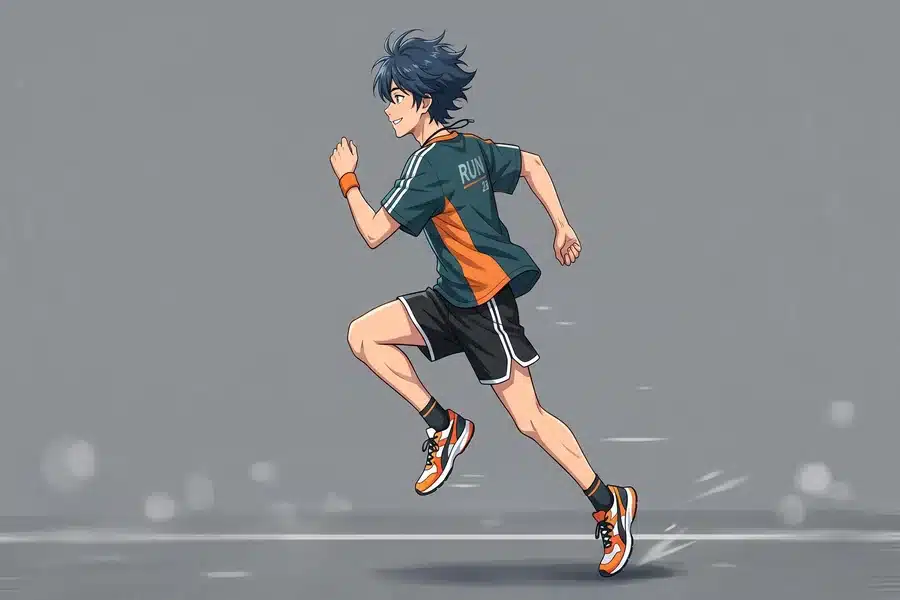
A few weeks ago, I found myself staring at a half-finished walking cycle in Aseprite. Four hours in, I had exactly three frames that looked vaguely like they belonged to the same character. The proportions were drifting. The line weight had thickened on frame two. By frame four, the character’s left arm had somehow migrated two pixels north. I closed the file, opened a new tab, and typed in a search that would change how I think about game art production: AI Sprite Generator.
I’m not an artist. I’m a developer who builds games on nights and weekends, and like many solo indie devs, I’ve accepted that my characters will either look like they were drawn by a sleep-deprived raccoon or I’ll have to spend money I don’t have on custom assets. So when I stumbled across a tool promising game-ready sprite animations in minutes without drawing skills, I was skeptical. I’ve tested enough AI art tools to know that “consistent style” is usually the first promise broken.
But this one had a different pitch: it wasn’t about generating random cool-looking characters. It was about generating animations – walk cycles, attack moves, idle loops – with locked color palettes, fixed proportions, and guaranteed style consistency across every single frame. That’s the part that got my attention. Because in game development, a cool static sprite is useless without the 8 frames that make it walk.
So I put it through a real production test. No cherry-picked prompts. No “ideal conditions.” Just a developer trying to ship a game.
The Real Problem: Why Sprite Animation Breaks Most AI Art Tools
Before I get into what this tool actually does, let’s talk about why most AI image generators fail at game sprites. The issue isn’t that they can’t draw a character. The issue is that they can’t draw the same character 8 times in a row with identical proportions, line thickness, and color values.
In traditional sprite creation, an artist might spend 30 to 120 minutes per animation frame[reference:0]. A complete character with walk, idle, and attack animations typically takes 20+ hours and costs between $500 and $5,000 per character[reference:1]. But the real killer isn’t the time – it’s the consistency problem. When you draw frame 1 versus frame 30, colors shift, line thickness varies, and proportions start to wander[reference:2]. That’s why so many indie games end up with characters that look slightly different in every animation state.
What I needed was a tool that could lock in an art style once and apply it to every frame, every animation, every character variant – without me having to redraw anything.
How the Workflow Actually Works (No Drawing Skills Required)
The process is refreshingly straightforward. There’s no complex node system, no diffusion model tweaking, no prompt engineering rabbit hole. Here’s what the actual steps look like.
Step One: Define Your Character’s Visual Identity
Upload or Describe – Then Lock the Style
You start by either uploading a character image or describing your character’s appearance[reference:3]. From there, you choose an art style preset – pixel art (8-bit, 16-bit, or 32-bit), 2D cartoon, or anime[reference:4]. But here’s where it gets interesting: you can also train the AI on your own reference images[reference:5].
I uploaded three reference images from a previous project – a side-scroller with a specific hand-drawn feel. The AI extracted the color palette, line thickness, detail level, and proportions from those references[reference:6]. From that point forward, every sprite generated would use only my approved colors with those locked style parameters[reference:7]. Frame 1 and frame 100 would look identical in style[reference:8]. That’s the consistency guarantee that most tools can’t deliver.
Step Two: Choose Your Animation and Generate
From Walking to Combat – All the Essential Animations
Next, you select the animation type: idle loop, walk cycle (6-8 frames), run, jump, melee attack, ranged attack, magic cast, hit reaction, death, crouch, roll, climb, swim, or victory[reference:9]. You set the frame count (typically 6 to 12 frames) and adjust the frame rate – 8 FPS for retro pixel art, 12 to 24 FPS for smoother modern 2D[reference:10].
Then you click generate. The AI creates all animation frames with perfect style consistency in under 60 seconds[reference:11]. In my test, a 6-frame idle animation took about 45 seconds. An 8-frame walk cycle took just over a minute. That’s not “fast for AI” – that’s fast for any workflow. Compare that to the 4 to 16 hours a traditional 8-frame walking cycle would take in Aseprite[reference:12].
Step Three: Export to Your Game Engine
One-Click Unity, Godot, and Unreal Integration
This is where the tool separates itself from generic AI art generators. You’re not downloading a PNG and figuring out the rest yourself. The export includes a sprite sheet atlas (PNG), JSON metadata with frame positions and durations, animation controller presets, and even collision box suggestions[reference:13][reference:14].
For Unity, you get the sprite sheet atlas, JSON with frame data, an animation controller preset, and collision box suggestions[reference:15]. For Godot, it exports as AnimatedSprite format with .tres resource files and properly named sprite frames[reference:16]. For Unreal, it provides Paper2D-compatible sprite sheets with flipbook data[reference:17]. You can also export as individual PNG frames or standard JSON sprite atlas for any engine[reference:18].
One click. No manual setup. That alone saved me hours of configuration work.
What Actually Happened When I Generated 12 Characters
I decided to run a real production test: generate a full roster of characters for a top-down RPG prototype. I needed 12 unique NPCs, each with idle, walk, and talk animations. Four of them needed 8-directional support for isometric movement.
The results were surprising in both good and unexpected ways.
The first character – a generic villager – took about three minutes from upload to export. By the time I got to character 12, I had streamlined the process to about 90 seconds per character for the base generation, plus another minute or two to tweak colors and outfits.
The 8-directional generation worked exactly as advertised. One character base generated all 8 angles automatically[reference:19]. That’s crucial for isometric RPGs, where manually drawing 8 angles for every animation state is a monumental time sink.
Style consistency held up across all 12 characters. The color palette was locked. The line thickness was identical. The proportions didn’t drift. When I imported the sprite sheets into Unity, the characters looked like they belonged in the same game world – not like they were drawn by 12 different artists working in 12 different coffee shops.
The limitations were also clear. Complex poses with overlapping limbs sometimes required a second generation. The AI’s interpretation of “attack” didn’t always match my mental image on the first try. And while the style consistency was impressive, the results were best for base animations – the kind you need 90% of your sprites to be. For hero characters that need unique, bespoke poses, I’d still consider opening Aseprite for final polish[reference:20].
Who This Actually Works For (And Who Should Look Elsewhere)
| User Type | Best Use Case | Key Benefit | Consideration |
| Solo indie developers | Complete character sheets without hiring artists | 10x faster than manual pixel art[reference:21] | Best for volume, not hero characters |
| RPG & strategy developers | 8-directional sprites for isometric views | One base generates all 8 angles automatically[reference:22] | Requires style reference for consistency |
| Mobile & casual game devs | Character variations with different outfits and colors | All variants match perfectly across hundreds of sprites[reference:23] | Limited to 2D animation styles |
| Game jam participants | Rapid prototyping with custom art | Generate game-ready sprites in minutes[reference:24] | Not a replacement for final polish |
| Programmers with no art skills | Full animation sets without drawing | Direct engine export saves setup time[reference:25] | Results vary with prompt quality |
The Real Limitations (Because Nothing Is Perfect)
Let’s be honest about where this tool falls short. First, the quality of output depends heavily on the quality of your reference images. If you upload blurry or inconsistent references, the AI will extract blurry or inconsistent style parameters. Garbage in, garbage out – that rule still applies.
Second, complex animations with intricate poses may require multiple generations. In my testing, the AI handled simple movements (idle, walk, run) beautifully. Combat animations with specific weapon angles sometimes needed a second attempt. The tool’s FAQ acknowledges that results may vary[reference:26], and that’s a fair assessment.
Third, while the style consistency is genuinely impressive, it’s not perfect in every single frame. I noticed very minor variations in hair rendering between frame 1 and frame 8 of a walk cycle – nothing that would break a game, but something a pixel artist would catch. For most indie projects, these variations are invisible in motion. For a professional studio with strict quality standards, you’d still want an artist to review the final export.
Finally, the tool is designed for 2D sprite animation. If you’re working in 3D or need highly stylized, non-standard art directions, this isn’t the right fit. It excels at volume and consistency, not at pushing the boundaries of artistic expression.
Where the Tool Fits in a Production Pipeline
After two weeks of testing, here’s where I’ve landed: this isn’t a replacement for professional pixel artists. It’s a force multiplier for developers who can’t afford to hire them.
For rapid prototyping, it’s invaluable. I can test gameplay mechanics with custom art instead of placeholder squares. For enemy design, it’s a lifesaver – I generated 30 enemy variations for a roguelike prototype in an afternoon. For NPCs, background characters, and asset-heavy games, it removes the biggest bottleneck in indie development[reference:27].
But for hero characters – the protagonist, the main villain, the characters that players will stare at for hours – I’d still consider hiring an artist or spending the time in Aseprite. Use the AI for 90% of your sprites and save the budget for the 10% that need human touch[reference:28].
The workflow that worked best for me: generate base animations in the tool, export to Unity with the included metadata, and then tweak specific frames in Aseprite if needed. That hybrid approach gives me speed where I need it and precision where it matters.
The bottom line is this: if you’re an indie developer with more ideas than art skills, this AI Sprite Generator is worth your time. It won’t replace the craft of pixel art. But it will get you from concept to playable prototype faster than you thought possible – and sometimes, that’s exactly what you need to ship a game.
The walking cycle I abandoned that night in Aseprite? I regenerated it in three minutes the next morning. It wasn’t perfect. But it was consistent, it was game-ready, and it let me move on to the parts of game development that actually keep me up at night – the gameplay, the systems, the story. And for a solo developer, that trade-off is worth every second saved.
