


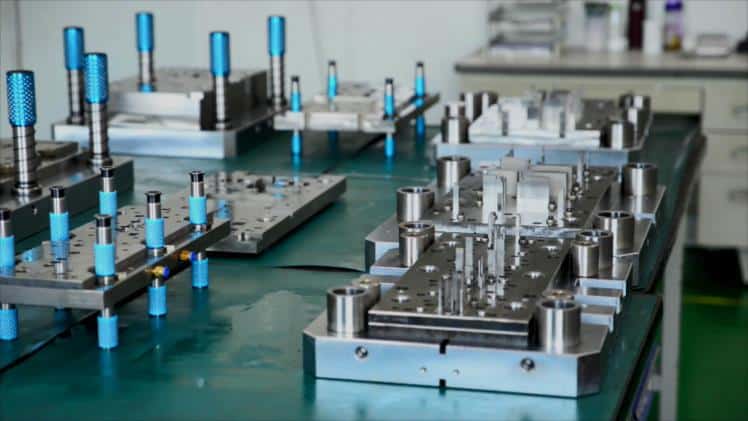
In the manufacturing world, precision and efficiency are two key factors that can make or break a production process. As industries evolve, the need for cost-effective, reliable, and high-quality parts has become paramount. Manufacturers constantly seek ways to meet these demands while maintaining high standards. This balance is essential for staying competitive in an ever-changing market.
One solution that has transformed the industry is progressive die stamping. Progressive Metal Stamping manufacturers have found this method highly effective for meeting production goals. The process enhances productivity, reduces costs, and ensures consistent quality in every part produced. This article explores the many benefits of progressive stamping in precision manufacturing and its critical role in modern industry.
What is Progressive Stamping?
It is a metalworking method that involves feeding a metal strip through a series of stations, each performing a different operation. These operations include cutting, bending, punching, and shaping the metal to achieve the desired part. The metal strip moves progressively through each station, hence the name.
At the end of the process, a finished component is created, with each station adding to its final form. One of the main advantages of this technique is that multiple operations co-occur at different stages in the same process. This reduces the overall time it takes to produce a part, making it highly efficient for high-volume production runs.
6 Benefits of Progressive Stamping in Precision Manufacturing
It offers numerous benefits, making it an ideal choice for manufacturers seeking efficiency and precision. Here are some key advantages:
1. Cost Efficiency
One of its most significant benefits is its cost-effectiveness. Since multiple operations are completed in a single process, manufacturers can reduce labor costs and minimize material waste. This is especially important for large-scale production, where even small savings can add up over time.
Additionally, the need for manual intervention is reduced, as the entire process is automated once set up. This lowers labor costs and minimizes the risk of human error, leading to higher accuracy in part production.
2. High Precision and Consistency
Progressive stamping excels in industries where precision is critical. Each operation is carefully designed and executed in a controlled environment, ensuring consistent results with minimal variation. This is essential for sectors such as automotive, aerospace, and electronics, where even the slightest deviation can compromise product quality.
It also allows for the production of complex parts with intricate designs. The precise control over each process stage ensures that parts are formed to exact specifications, making it ideal for high-precision manufacturing.
3. Increased Production Speed
Progressive stamping excels in high-speed production environments. Since multiple steps are completed in one continuous process, manufacturers can produce large quantities of parts quickly. This significantly reduces lead times and helps companies meet tight deadlines without sacrificing quality.
4. Versatility in Material Use
Another advantage of it is its versatility in material handling. The process can work with various metals, including aluminum, copper, steel, and alloys. This flexibility allows manufacturers to choose the most appropriate material for their specific application, ensuring strength, durability, and cost-effectiveness.
5. Reduced Waste and Energy Consumption
It is also a more environmentally friendly option compared to other manufacturing processes. The method’s precision ensures less material is wasted during production, reducing scrap and lowering material costs. By utilizing the entire strip of metal efficiently, manufacturers can maximize the use of their resources.
6. Enhanced Tool Longevity
Progressive stamping uses tools and dies designed to handle high-volume production runs without frequent maintenance. The longevity of these tools reduces downtime and ensures continuous operation, further boosting productivity. Manufacturers can achieve long-term savings and ensure smooth production with minimal interruptions by investing in a durable, high-quality unit.
Applications of Progressive Stamping
It is widely used in industries that require high precision and large-scale production. Some of the key sectors that benefit from this process include:
- Automotive Industry: Progressive stamping is ideal for producing complex components like brackets, connectors, and frames used in vehicles. Producing high volumes with consistent quality is crucial in this sector.
- Electronics Industry: The electronics industry requires small, intricate parts with tight tolerances. Progressive stamping can produce components like connectors and terminals with the precision needed for these applications.
- Aerospace Industry: In aerospace, where safety and reliability are paramount, progressive stamping provides the accuracy required to produce lightweight, durable components for aircraft and spacecraft.
It offers a range of benefits that make it indispensable for industries requiring high-volume and high-precision production. Progressive stamping is expected to become more streamlined and productive. Its ability to enhance both speed and precision solidifies its role in the future of manufacturing.
Progressive Metal Stamping manufacturers who invest in this technology will maximize operational efficiency and maintain a competitive edge. Companies can meet the growing demands of modern markets by delivering high-quality, precision-engineered parts. Understanding the benefits and applications of progressive stamping allows manufacturers to make informed decisions about integrating it into their production processes. This can ensure that they remain competitive in an increasingly demanding industry.
Content Quality Form
Content Proof checked by: Poulomee
Relevancy:
- Related to the client’s products or services (Yes)
- No Review type content (Yes)
- Relevant to the target link included in the article (Yes)
Topic:
- Content should not be overly promotional about the brand’s product or service (Yes)
- Quality (Yes)
- Written in US English (Yes)
- No grammar, spelling errors, run-on sentences, etc. (Yes)
- Minimum 500 words (Yes)
- Tense, POV maintained across the content (Yes)
Links:
- Link is geo-focused; content should be related to that geo. Ex: if the link is about a specific location, the content should also be related to that location (Yes)
- Link is not out of place with the content (Yes)
- Link should appear as early in the content as possible (Yes)
- Only include the 1 brand link provided (i.e. do not add additional links to the client’s other pages or homepage unless specified) (Yes)
Anchor Text:
- Matches exactly with what is provided (pay attention to intentional misspellings and upper/lowercase) (Yes)
- Flows naturally into the sentence and not be awkwardly stuffed in other links (Yes)
- Included at least 1 outbound relevant link to non-competitor sites (Yes)
- Included at least 1 internal relevant link within the shortlisted site (Yes)
- Anchor text is relevant to the page it’s linking to (Yes)
Disclosure
- Not written as if the client wrote it, do not use terms like “we” and “us” (Yes)
- Relevant Image included (No)
